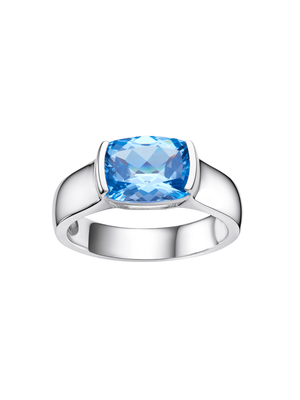
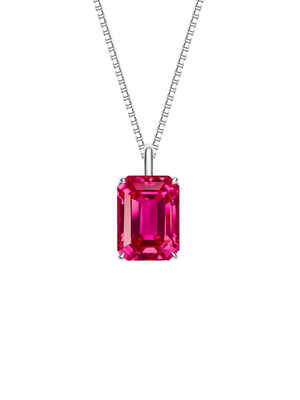
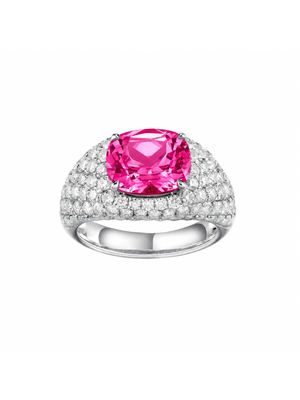
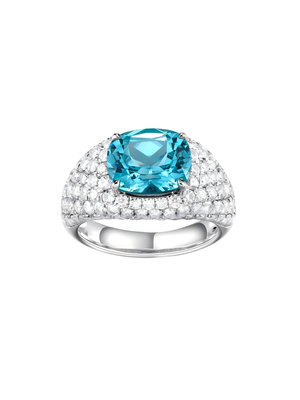
- Aug 17
- By DREXEY Editorial
Picture this: you find a bright pink or electric-blue stone online. The color looks almost lit from within, and the price feels surprisingly good. Then, months later, the edges start turning pale. Or a jeweler tells you that the “stone” is actually two or three pieces bonded together.
This does not mean every coated or layered stone is bad. Some are beautiful, wearable, and completely legitimate. You just should not have to discover the construction after you have paid for it.
Before buying, ask yourself three simple questions: What is the material? Where is the color coming from? Is the stone one piece or several?
If the listing cannot answer those questions in plain English, the color should not be enough to convince you.
First, Find Out Where the Color Is Coming From

When the color is sitting on the outside
A gemstone coating works a little like tint on a window. The stone underneath may be pale, colorless, or simply a different color. A very thin layer on the outside creates the pink, blue, rainbow, or metallic finish you see.
Fresh out of the box, this can look fantastic. The issue is wear. The GIA guide to gemstone treatments notes that thin coatings can scratch, especially around facet edges and junctions. Heat, chemicals, polishing, and everyday friction may also affect the finish.
You might notice pale spots near the edges, scratches revealing another color underneath, or a stone that looks intense from the front but much lighter from the side. Those are reasons to look closer, not proof by themselves.

And please do not test it by scratching the surface or wiping it with acetone. You may damage the stone without getting a reliable answer.
When the brightness is coming from behind
A foil-backed stone is more like placing a tiny mirror behind the gem. Light travels through the stone, reflects from the backing, and returns toward your eye. The result can look brighter, richer, and more dramatic.
This technique has a real place in antique jewelry. In an older piece, foil backing can be part of the original craftsmanship rather than an attempt to fool anyone. What matters is knowing that some of the color or sparkle depends on that backing.
A closed-back setting can make you curious, but it does not prove there is foil behind the stone. Closed backs are used for plenty of legitimate design and historical reasons. A metallic glow beneath the gem, color concentrated near the base, or cloudy areas behind it are more useful clues.
If the jewelry is antique, do not open the setting yourself. Old foil, moisture, and fragile metalwork are a bad combination for home experiments.
When one “stone” is really two or three layers
A doublet is made from two joined pieces. A triplet has three. The easiest way to picture one is as a gemstone sandwich.
The layers might include a thin slice of opal, a dark backing, a clear quartz or glass top, laboratory-grown material, plastic, or another stone. Sometimes the construction supports a delicate material and makes it easier to wear. Opal doublets and triplets are common examples.
There is nothing wrong with buying an opal doublet when it is sold as an opal doublet. The problem is paying for a single-piece opal and later finding out that most of what you can see is a clear cap and backing.
Layering can also be used to imitate a more expensive stone. GIA examined a quartz assembly that appeared emerald green because color was concentrated in the bonded construction. From the top, it looked convincing. From the side, the layers told the real story.
That is why side photos matter. A perfectly straight line, tiny flattened bubbles along a seam, different-looking top and bottom sections, or a clear dome over a thin colored layer can all suggest an assembled stone.
One more thing that often causes confusion: lab-grown does not mean coated, and coated does not mean lab-grown. A laboratory-grown sapphire is sapphire material grown in a controlled environment. A coating is something added later. A lab-grown stone can even be coated after growth, so origin and treatment are two separate questions.
What Should Actually Make You Walk Away?
Not the word “coated.” Not a foil back. Not even a doublet or triplet.
What should make you walk away is a seller who keeps describing the look but avoids telling you what creates it.
A listing that says “Paraiba blue,” “emerald green,” or “ruby red” may sound specific, but those are still color descriptions. They do not identify the material. The same goes for vague names such as “nano gemstone,” “premium crystal,” or “created stone.”
I would also pause if the page shows only face-up photos, if the title and specifications use different material names, or if the seller gives a long marketing answer to a very short question.
“What is the stone underneath the color?” should not be difficult to answer.
In the United States, the FTC Jewelry Guides call for treatment disclosure when a treatment is not permanent, requires special care, or significantly affects value. For an online order, that information should be visible before checkout, not introduced for the first time on a card inside the package.
Before Checkout, Ask These Four Questions
You do not need to sound like a gemologist. Send the seller this:
- What is the exact material underneath the visible color?
- Is the stone coated, backed, filled, dyed, or made from bonded layers?
- Can water, heat, chemicals, or normal wear change its appearance?
- Will the complete material and treatment description appear on my receipt?
A good seller should be able to answer in a few direct sentences.
If the piece is expensive, photos and promises are not always enough. A qualified gemologist or an independent laboratory can examine the stone and identify details that may be hidden by a bezel or closed setting.
Already Own One? Keep the Care Simple
If you know the exact treatment, follow the care instructions that came with the piece. If you are not sure, treat it gently until a jeweler can identify it.
Skip ultrasonic and steam cleaning. Avoid alcohol, acetone, chlorine, harsh jewelry dips, and abrasive polish. Do not leave it soaking in water, and keep it away from high heat.
A soft, slightly damp cloth is the safer starting point. Dry the piece promptly and store it separately so harder jewelry does not scratch the surface.
Before any repair, polishing, resizing, or stone resetting, tell the jeweler that the gem may be coated or assembled. GIA's jewelry care guidance warns that heat, solvents, steam, and ultrasonic cleaning can damage some treated gems.
How Drexey Thinks About Gemstone Names
At Drexey, we believe the material name should come before the fantasy of the color.

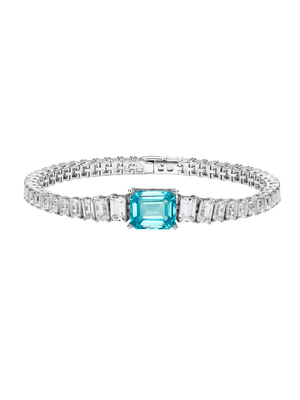
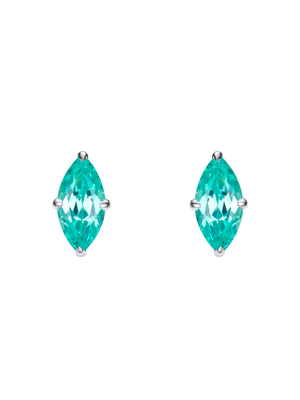
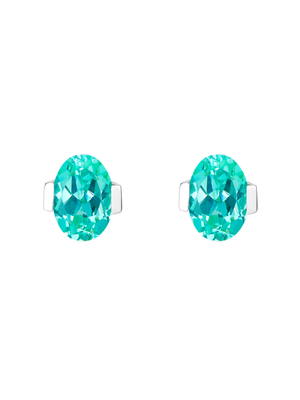
“Paraiba” can describe an electric blue-green color direction, but it should not make a different material sound like Paraiba tourmaline. That is why we use Paraiba Hue YAG. Paraiba Hue describes the color. YAG tells you what the material is.
The same principle applies to coatings and layered stones. If the color comes from a film, a backing, or a bonded layer, that information belongs beside the product description, not buried after the sale.
When browsing Drexey's colored gemstone jewelry, start with the material, then look at origin, color, cut, and setting. A beautiful stone becomes more desirable when you understand what you are actually looking at.
The One Rule Worth Remembering
A coated stone, foil-backed piece, doublet, or triplet can still be worth owning. What you should never pay for is a material, durability, or rarity the product does not have.
If the seller cannot tell you what sits beneath the color, you do not have enough information to buy it.
Sources and further reading
Drexey sells jewelry containing laboratory-grown gemstones and laboratory-created crystals and therefore has a commercial interest in this subject. Independent definitions and disclosure guidance in this article are based on GIA and FTC sources.