- May 27
- By DREXEY Editorial
Learning how to layer necklaces without tangling is less about buying a special gadget and more about giving every chain its own place. Most tangles start when two necklaces sit at nearly the same length, carry similar weight, and move across each other all day.
Start with two pieces. Choose one as the anchor, leave visible space between the chains, and wear the combination for a few minutes before adding a third. If the two-necklace version cannot stay organized, another chain will not fix it.
The quick answer
Use a noticeable difference in length—about two inches is a practical starting point—then adjust on your own body. Mix chain weights or textures, keep pendants from landing on the same line, and let one necklace be the main focal point. A layering clasp can organize the closures, but it cannot guarantee a tangle-free day.

Why layered necklaces tangle
Usually, several small things are happening at once:
- the chains are almost the same length;
- two pendants keep meeting in the same area;
- fine chains have similar weight and move together;
- separate clasps rotate toward the front;
- hair, collars, scarves, or bag straps catch the chains;
- skincare or hair-product residue makes fine chains cling to skin or hair; or
- ordinary movement repeatedly crosses one chain over another.
You cannot remove movement, but you can reduce the number of ways the necklaces collide.
Choose the anchor necklace first
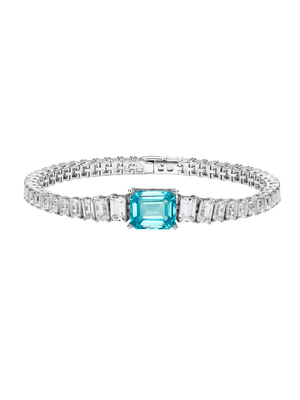
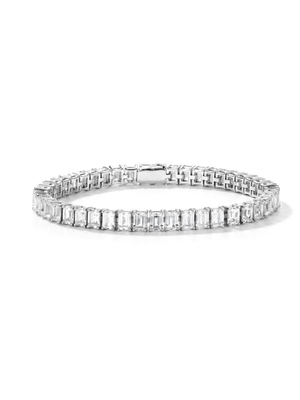
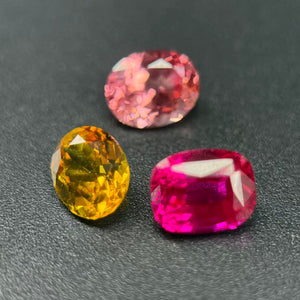
The anchor is the piece you most want to see. It might be a colored gemstone pendant, a tennis necklace, a meaningful charm, or a sculptural chain. Put that piece on first and notice where it lands with the top or dress you are actually wearing.
Then add a quieter piece above or below it. If the anchor is a continuous tennis necklace, a single pendant beneath it creates a clear change of shape. If the anchor is a colorful pendant, a simple upper chain gives it light and texture without placing a second pendant in the same spot.
Give every chain a separate length
Two inches is useful as a starting gap, not a universal rule. Neck circumference, chain thickness, pendant depth, and neckline all change the final position. A pendant also hangs below its listed chain length, so two 18-inch necklaces can look very different once worn.
| Combination | Why it works | What to check |
|---|---|---|
| 16 in + 18 in | A close everyday layer | Make sure the lower pendant clears the upper chain |
| 16 in + 20 in | More negative space and less contact | Check that the longer piece suits the neckline |
| 15 or 16 in tennis necklace + 18 or 20 in pendant | A bright upper frame with one lower focal point | Keep the pendant below the tennis line |
| 16 in + 18 in + 20 or 22 in | Clear short, middle, and long positions | Use only one large pendant |
An extender is useful when two favorite necklaces land too close together. Even a one-inch adjustment can separate a pendant from the chain above it. Always test the lengths with the intended neckline before deciding that the spacing is right.
Mix weight or texture, then choose one focal point
Two nearly identical fine chains tend to travel together. A little contrast helps them keep separate visual and physical roles. Try a smooth chain with a more structured one, a fine pendant chain with a tennis necklace, or a delicate upper layer with a slightly heavier lower layer.
The pieces can still feel related. Repeat a metal tone, gemstone color, or geometric idea. What you want to avoid is three necklaces with equally large pendants all landing within the same inch of space.
A continuous tennis necklace already brings repeated light across the collarbone. Pairing it with one lower pendant is usually cleaner than adding another necklace with multiple moving charms.
A real Drexey layering formula
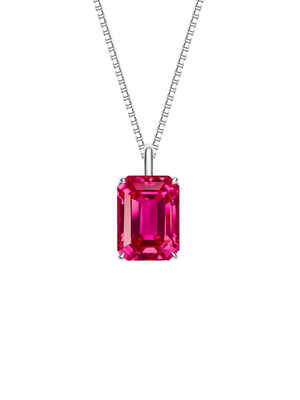
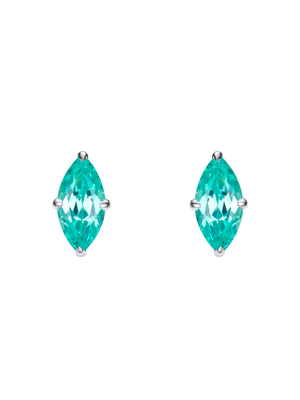
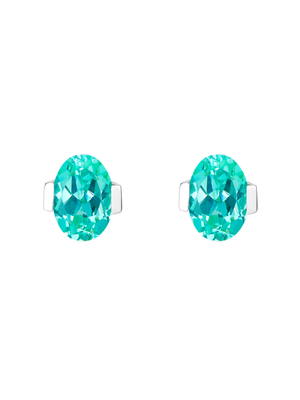
The LAGO Emerald-Cut Lab-Grown White Sapphire Tennis Necklace is available in 15, 16, 16.5, 18, and 20-inch lengths. The ALIX Emerald-Cut Lab-Grown Gemstone Necklace is offered in 16, 18, and 20-inch lengths.
For a two-piece arrangement, try LAGO at 15 or 16 inches and ALIX at 18 or 20 inches. The tennis line stays close to the collarbone while the colored center stone sits lower. Because bodies and pendant positions vary, treat those numbers as a fitting room—not a promise that every combination will sit identically.
Will a necklace layering clasp stop tangling?
It can help, but it is not magic. A layering clasp connects several necklaces to one shared closure, which keeps the backs together and makes a regular combination faster to put on.
It works best when the necklaces already have different lengths and enough difference in weight to stay apart. The entire connector can still rotate, and the chains can still cross during movement. Make sure every clasp is compatible with the connector and that the combined weight does not pull the shortest necklace backward.
Reduce tangles while wearing and storing
Apply lotion, sunscreen, perfume, and hair products first, then let them dry before putting on jewelry. Center each clasp, separate the pendants, and move your shoulders in front of a mirror. If the chains cross immediately, change the spacing before leaving.
High collars, textured knits, scarves, loose hair, and crossbody straps create more contact. On an active day, two well-spaced layers may stay neater than three or four. If a knot starts, remove the necklaces and loosen it on a flat surface instead of pulling it tighter while you are wearing them.
At the end of the day, remove the longest necklace first. Fasten each clasp and store the chains separately, either flat or in individual compartments. Do not drop a connected stack into one pouch unless it was designed as a single preassembled piece. More care tips are in How to Care for Lab-Grown Gemstone Jewelry.
Three common questions
How much space should I leave between necklaces?
About two inches is a useful place to begin. Use more space when pendants are large, chains are very similar, or the pieces keep touching.
Can I layer two pendant necklaces?
Yes. Choose different chain lengths, make sure the pendants do not land on the same line, and let one pendant be visually quieter than the other.
Why do my necklace clasps move to the front?
Movement, pendant weight, chain balance, hair, and clothing can all rotate a clasp. A connector may reduce independent movement, but occasional repositioning is normal.
The best layered look is not the one with the most necklaces. It is the one where every piece remains visible, comfortable, and easy to recognize.