- Aug 10
- By Mary Lee
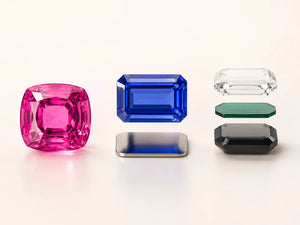
Lab-grown gemstones are crystals produced in controlled environments instead of being mined from the earth. When the name is used correctly, a laboratory-grown sapphire, laboratory-grown ruby, or laboratory-grown emerald has essentially the same defining chemical, optical, and physical properties as the corresponding mined gemstone. Its origin, however, is laboratory growth—and that origin must be stated clearly.
That definition sounds simple, but the market often mixes together lab-grown gemstones, laboratory-created crystals, simulants, color names, and vague phrases such as “nano gemstone.” They are not interchangeable. The fastest way to understand any colored stone is to ask three questions:
- What is the actual material?
- Does that material have a corresponding natural gemstone?
- How was its laboratory origin and growth method disclosed?
The Short Definition
A properly named lab-grown gemstone is a laboratory-produced counterpart of a natural gemstone. A lab-grown sapphire is corundum, the same mineral species as mined sapphire. A lab-grown emerald is beryl, the same mineral species as mined emerald. The difference is origin: controlled crystal growth rather than geological formation and mining.
Same named gemstone material. Different origin. Clear disclosure required.
This does not mean every crystal made in a laboratory is a lab-grown version of a mined gemstone. Some materials—including YAG—are laboratory-created crystals with their own material identity and no known natural gem counterpart. Others are simulants: different materials chosen because they resemble another gemstone.
Lab-Grown vs. Simulated Gemstones: What Each Label Means
| Label | What It Means | Example |
|---|---|---|
| Natural or mined gemstone | Formed through geological processes and recovered from the earth | Natural sapphire |
| Laboratory-grown, laboratory-created, or synthetic named gemstone | Produced by people and has essentially the same defining optical, physical, and chemical properties as the named natural stone | Laboratory-grown sapphire |
| Simulated or imitation gemstone | A different material used to create a similar appearance | Blue glass used to imitate sapphire |
| Laboratory-created crystal with its own identity | A man-made crystal that should be sold by its actual material name rather than as a synthetic version of another gemstone | Paraiba Hue YAG |
| Composite or assembled material | A product made from more than one part or containing filler or binder; its construction and care requirements need separate disclosure | Glass-filled composite material |
In gemology, synthetic describes laboratory origin; it does not automatically mean imitation. In U.S. jewelry advertising, the FTC Jewelry Guides require a laboratory-origin term to immediately precede the gemstone name with equal prominence. They also say a seller should not combine “laboratory-grown,” “laboratory-created,” or “synthetic” with a natural stone name unless the material has essentially the same defining properties as that stone.
Which Gemstones Can Be Lab Grown?
Commercially produced laboratory-grown counterparts include diamond, ruby, sapphire, emerald, alexandrite, spinel, quartz, and opal. The useful growth method depends on the crystal: there is no single machine or recipe for every gemstone.
Lab-Grown Sapphire and Ruby
Sapphire and ruby are both corundum. Ruby is the red variety; sapphire covers the other recognized colors of gem corundum. Laboratory-grown corundum has the same basic crystal structure and Mohs hardness of 9 as natural corundum. Its color depends on trace elements and growth conditions, so “lab-grown sapphire” is not one standard shade.
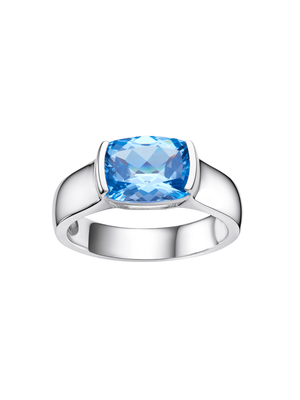
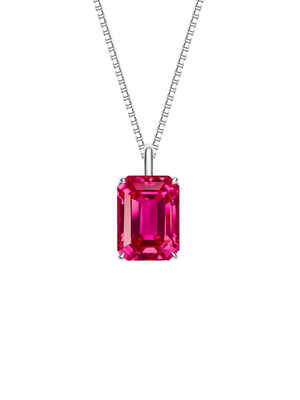
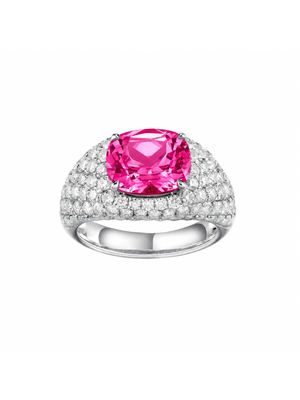
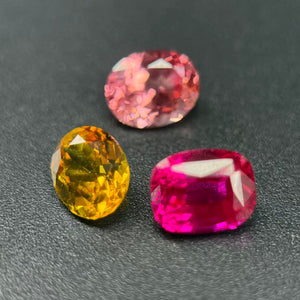
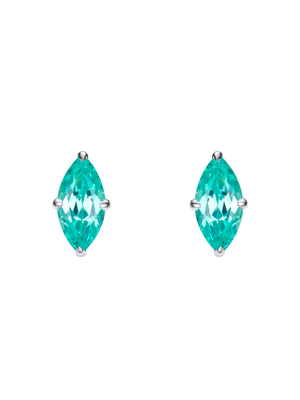
Corundum’s wide color range gives each design a different character. Royal Blue feels deep and composed, ruby red is immediate and intense, while Hot Pink, Canary Yellow, Purple, and Sunrise tones feel more expressive. Cut and setting shape that color again: an oval three-stone ring creates a graceful, balanced silhouette; an emerald-cut Royal Blue sapphire brings out clean geometry and broad flashes of light; and marquise stud earrings give the stone a sharper, more elongated presence. The design changes, but the underlying material remains laboratory-grown corundum.

Lab-Grown Emerald
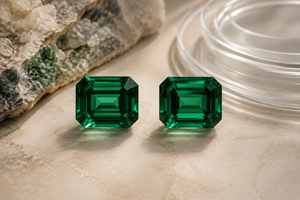
Emerald is the green variety of beryl. A correctly identified laboratory-grown emerald is synthetic beryl with the defining properties of emerald, not green glass or green corundum. Laboratory-grown emerald can contain growth zoning, tubes, cavities, or other internal features; laboratory origin does not promise a flawless crystal.
Emerald’s Mohs hardness is lower than corundum’s, and durability also depends on inclusions, cut, and setting. A protective bezel or well-designed prong setting can matter more in everyday wear than whether the emerald formed underground or in a laboratory.
For a closer comparison of origin, treatments, price, appearance, and care, read Lab-Grown Emerald vs. Natural Emerald.

Lab-Grown Diamond
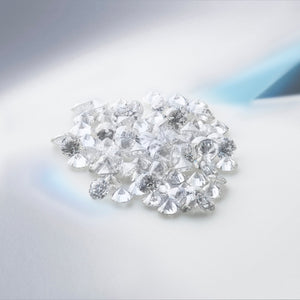
Laboratory-grown diamond is crystalline carbon with essentially the same chemical composition, crystal structure, and physical properties as natural diamond. Because diamond is grown mainly by HPHT or CVD, its production and grading differ from those of colored gemstones such as sapphire and emerald. Drexey explains those differences in its 2026 lab-grown diamond guide.
Not Every Laboratory-Created Stone Is a Lab-Grown Version of Another Gem
“Made in a laboratory” describes origin, but it does not tell you the material. A laboratory-created crystal may have the identity of a named gemstone, or it may be a different material with its own composition and optical properties.
Moissanite
Lab-created moissanite is silicon carbide. It is not diamond and not white sapphire. When it is sold clearly as moissanite, it has its own material identity; when it is presented as a diamond look-alike, it functions as a diamond simulant. Its optical behavior—including stronger rainbow fire—differs from white sapphire. See Drexey’s comparison of laboratory-grown white sapphire and lab-created moissanite.
YAG
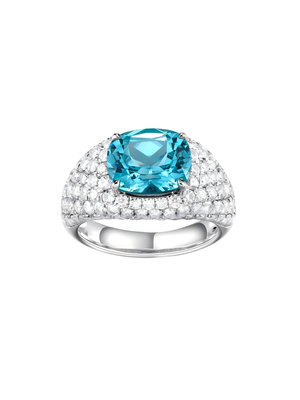
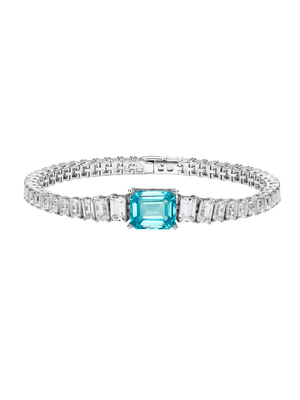
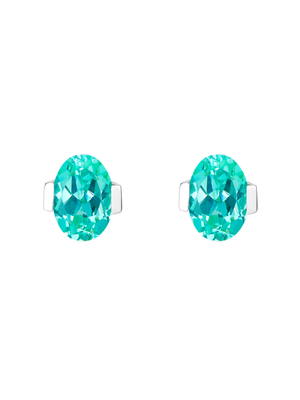
YAG is yttrium aluminum garnet, a laboratory-created crystal with a garnet-type structure but no known natural gem counterpart. Drexey’s Paraiba Hue YAG is not tourmaline, not laboratory-grown Paraiba tourmaline, and not a synthetic counterpart of a known natural garnet. “Paraiba Hue” describes its electric blue-green color direction; YAG identifies the material.
How Are Lab-Grown Gemstones Made?
A grower supplies the correct ingredients and controls the conditions under which atoms join a seed crystal or growing surface. The result is rough crystal that still has to be selected, oriented, cut, polished, matched, and set.
- Czochralski pulling: a rotating seed is pulled slowly from molten ingredients.
- Hydrothermal growth: material grows from a hot, pressurized water-based solution.
- Flame fusion: fine powder melts in a high-temperature flame and forms a crystal boule.
- Flux growth: ingredients dissolve in a molten flux and crystallize gradually.
- HPHT and CVD: diamond-specific routes that grow crystalline carbon under controlled conditions.
Each method can leave characteristic internal features that help trained gemologists identify laboratory origin. Growth method is useful documentation, but it does not replace material identity, cutting quality, or inspection of the finished stone.
Drexey’s Documented Material Standard
At Drexey, a color name never replaces material identity. According to written specifications from our current suppliers:
- Drexey’s laboratory-grown corundum—including its sapphire color options and ruby—is specified as Czochralski-grown.
- Drexey’s laboratory-grown emerald is specified as hydrothermally grown.
- Drexey’s Paraiba Hue YAG is a laboratory-created YAG crystal specified as Czochralski-grown.
Why Drexey Chooses Czochralski-Grown Corundum
For Drexey’s corundum program, documented Czochralski growth is a sourcing advantage—not a decorative luxury label. The process can produce large, highly controlled single-crystal rough. That gives our cutters a stronger starting point for consistent color selection, calibrated sizes, precise orientation, and close matching across three-stone rings, matched stud earrings, and continuous-line tennis jewelry.
For Drexey, documented Czochralski pulling is the high-end growth standard for laboratory-grown corundum. Its higher-control crystal growth gives us a stronger starting point for consistent color selection, calibrated cutting, and close matching. Flame fusion is the lowest-cost, highest-volume alternative. It can produce saturated color, but its rapidly grown rough does not offer Drexey the same documented level of color uniformity, trace-element control, or batch consistency, and it commonly shows curved striae, curved color banding, gas bubbles, and Plato lines under magnification.
Online marketplaces are crowded with flame-fusion products described only as “premium lab-grown sapphire,” without naming the growth method. That wording can make rapidly grown, mass-produced material appear equivalent to high-end, documented Czochralski-grown corundum. Buyers should be cautious: ask the seller to identify the growth method and support the claim with material-specific written documentation. Drexey chooses documented Czochralski-grown corundum because color consistency and close matching matter in finished jewelry.
No disclosed method, no verified growth claim.
Why Drexey Uses Hydrothermal Emerald
Beryl cannot be grown directly from its own melt in the same way corundum can. Hydrothermal growth is well suited to emerald because it forms beryl crystal from a hot, pressurized solution. It gives Drexey laboratory-grown emerald—not a different material chosen simply for its green color. We then evaluate the finished stone for color, visible internal character, cut, polish, and setting security.
These details apply to the materials Drexey currently uses and has documented. If a material or supplier specification changes, we will update the description rather than carry an old process claim forward.
Does Laboratory Origin Determine Quality?
No. Origin identifies how a crystal formed; it does not grade the finished jewelry. Quality has several stages:
- Material identity: Is the stone the material stated?
- Crystal growth: Is the rough suitable in color and internal character?
- Cutting: Are proportions, symmetry, orientation, facet junctions, and polish handled well?
- Matching: Do stones in a pair, three-stone ring, or tennis line work together?
- Construction: Is the setting secure and appropriate for the material?
A laboratory-grown gemstone can be poorly cut, windowed, overly dark, scratched, or badly set. It can also be exceptionally vivid and beautifully finished. If you are deciding whether that combination of color, craftsmanship, and price is right for you, read Are Lab-Grown Gemstones Worth It?
After Origin, Cut and Shape Decide What You See
Material identity tells you what a gemstone is. Cut, proportions, orientation, and setting determine how that material looks when worn. The same laboratory-grown sapphire can appear soft and elongated in an oval ring, crisp and architectural in an emerald cut, bright and symmetrical in a round cut, or bold and sculptural in a bezel-set signet ring.
- Emerald and other step cuts emphasize color, long lines, and an architectural look.
- Round, oval, radiant, and cushion cuts use different facet patterns to balance brightness, sparkle, and color.
- Solitaire settings keep attention on one center stone.
- Three-stone and cluster designs depend on close color, proportion, and scale matching.
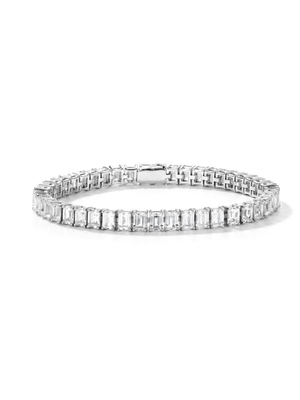
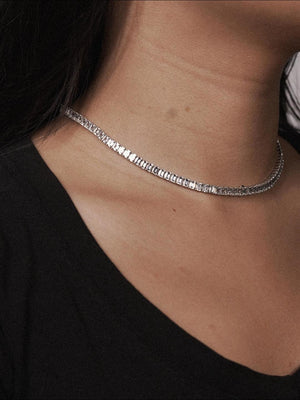
- Tennis necklaces and bracelets make consistency across a continuous line especially easy to judge.
This is why a growth-method label cannot replace finished-jewelry evaluation. The value becomes visible only after the rough has been selected, cut, matched, and set.
What Should You Check Before Buying?
- Read the complete material name. Look for “laboratory-grown sapphire,” “laboratory-grown emerald,” “lab-created moissanite,” or “Paraiba Hue YAG”—not a color name by itself.
- Separate material, origin, and color. “Royal Blue” describes color; “sapphire” describes the gem material; “laboratory-grown” discloses origin.
- Ask for the growth method when a seller presents the stone as high-end. The claim should be supported by written, material-specific documentation—not inferred from a product photograph.
- Look at actual product images. Use close photographs or video to inspect color, dark areas, windowing, facet reflections, and visible inclusions.
- Check dimensions as well as carat weight. Different materials have different densities, so equal carat weights do not always face up at the same size.
- Review the setting and metal. Solid gold, sterling silver, gold vermeil, and ordinary plating are different products. Prongs, bezels, clasps, and safety closures should suit the design and intended wear.
Frequently Asked Questions
Are lab-grown gemstones real?
Shoppers often use “real” to mean “not glass or an imitation.” The clearest answer is more specific: a properly named laboratory-grown sapphire, ruby, emerald, or diamond has essentially the same defining properties as its named natural counterpart, but it was grown in a laboratory and must be described that way. Drexey avoids using the unqualified word “real” for laboratory-produced material because the FTC cautions against using words such as “real,” “genuine,” or “natural” for artificially produced jewelry materials.
Are lab-grown and synthetic gemstones the same?
When both terms correctly precede the name of a natural gemstone counterpart, they describe laboratory-produced material. “Synthetic” is the traditional gemological term; “laboratory-grown” and “laboratory-created” communicate origin more plainly to many shoppers. None should be used with a natural stone name unless the material has essentially the same defining properties as that stone.
Are lab-grown gemstones the same as cubic zirconia or moissanite?
No. Cubic zirconia and moissanite have their own compositions and optical properties. A laboratory-grown sapphire is corundum; cubic zirconia is zirconium dioxide; moissanite is silicon carbide. A material can resemble another gem without becoming that gemstone.
Do lab-grown gemstones last as long as natural gemstones?
Durability follows the gemstone material, internal features, cut, setting, and wear—not laboratory origin alone. Laboratory-grown corundum has the hardness of corundum, while laboratory-grown emerald requires the care appropriate to emerald. No origin label makes poor construction durable.
Can lab-grown gemstones have inclusions?
Yes. Crystal growth can leave zoning, tubes, bubbles, flux remnants, seed-related features, or other inclusions. Some help a gemologist identify the process. “Laboratory-grown” does not mean flawless, and “flawless-looking” does not prove laboratory origin.
Are all lab-grown gemstones made by CVD or HPHT?
No. CVD and HPHT are primarily associated with diamond. Colored gem materials may be grown by Czochralski pulling, hydrothermal growth, flame fusion, flux growth, and other material-specific processes.
The Drexey Definition
A useful gemstone name should tell you what the material is before it tells you what the color resembles. Start with material identity, add laboratory origin, document the growth method when known, and then judge the cut, matching, setting, and finished design.
That order turns “lab-grown” from a vague marketing phrase into information you can actually use. Explore Drexey’s colored gemstone jewelry, including laboratory-grown gemstones and laboratory-created crystals identified by material.
Editorial Research Sources
- GIA: An Introduction to Synthetic Gem Materials
- GIA: Laboratory Growth of Gem Materials and the Attempt to Replicate Nature
- GIA: Accurate Reporting of Key Trace Elements in Ruby and Sapphire Using Matrix-Matched Standards
- GIA: Luminescent Synthetic Garnet-Like Crystals
- FTC Jewelry Guides: 16 CFR § 23.25
- FTC Jewelry Guides: 16 CFR § 23.27
- FTC: In the Loupe—Advertising Diamonds, Gemstones and Pearls
Drexey sells jewelry containing laboratory-grown gemstones and laboratory-created crystals and therefore has a commercial interest in this subject. Independent definitions and process descriptions in this guide are based on GIA and FTC sources. Drexey-specific growth-method statements are based on current supplier documentation.