- Sep 24
- By Drexey
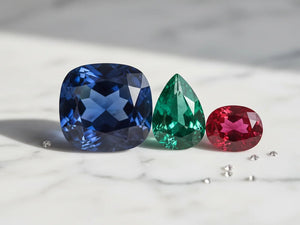
Every skin tone has its own beauty. A gemstone can echo its warmth, draw attention to its cool undertones, or create a contrast that makes its depth look especially rich. The most beautiful pairing lets you appreciate your skin and the stone together.
At DREXEY, that is where choosing gemstones for your skin tone begins: with the beauty that is already there. A peach-pink sapphire might bring a golden undertone into focus. A bright blue-green stone might make the depth of a complexion more striking. The color is there to celebrate you.
As you compare the suggestions below, look at your skin beside the gemstone. Notice the warmth, the subtle tones, and the way the two colors meet. That relationship is the heart of the choice.
Start with the beauty you want to highlight
There are two lovely ways to use color. Harmony repeats something you already see in your skin, such as a peachy warmth beside a pink-orange stone. Contrast places a different color beside it, such as a cool blue against a golden undertone, so both become more noticeable.
Neither approach asks your complexion to change. The aim is to enjoy its natural color more fully. Depending on the shade, setting, and light, you may prefer a gentle connection or a vivid contrast.
Skin tone and undertone are two different things
In styling, skin tone usually describes depth: fair, light, medium, tan, or deep. Undertone describes the color impression within that complexion, often discussed as cool, warm, or neutral.
A light complexion can have warm undertones, and a deep complexion can have cool undertones. Olive describes a greenish or gray-green cast that can occur across different skin depths and can lean warmer or cooler. It does not automatically mean tan or warm.
These descriptions can help you compare colors, but you do not need to assign yourself a perfect label before choosing jewelry.
A quick gemstone color guide by undertone
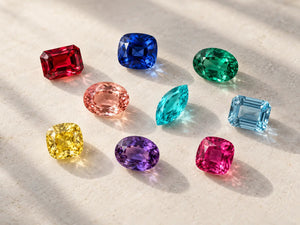
Use this table to explore what you want the color to bring into focus. These are styling suggestions to compare on your own skin, with room for every color you love.
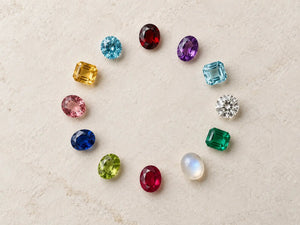
| The tones you want to highlight | Gemstone colors to compare | The relationship to look for |
|---|---|---|
| Cool undertones | Royal blue, purple, or hot pink sapphire | Echo cool nuances; compare yellow for warm contrast |
| Warm undertones | Canary yellow or Sunrise pink-orange sapphire | Echo golden or peachy warmth; compare blue for contrast |
| Neutral undertones | Emerald green, ruby red, or royal blue | Notice which subtle tones each color brings forward |
| Olive undertones, warm or cool | Emerald green, purple, or blue-green | Compare a connection with green nuances against a contrasting color |
If two rows sound like you, use both. Look for the pairing that makes you enjoy your natural coloring most.
Gemstones for cool skin tones
To draw attention to the cool nuances in your skin, begin with Royal Blue Sapphire, Purple Sapphire, or a blue-leaning pink. Compare whether the color creates a clear, gentle connection with your complexion. A white shirt or gray knit can keep the surrounding palette simple while you look.
Then compare a Canary Yellow Sapphire. Its warmth offers another way to make cooler undertones noticeable through contrast. Look at the skin beside the stone as well as the stone itself: the pairing should give you something to appreciate in both.
Pay attention to the shade as well as the name. A pale lavender and an inky purple will not have the same presence, even though both are purple.
Gemstones for warm skin tones
Golden and peachy undertones offer beautiful warmth to work with. Compare Canary Yellow Sapphire with the pink-orange of Sunrise Padparadscha Sapphire, looking for the way each echoes that warmth. Cream linen or an ivory top gives you a simple background for the comparison.
Royal Blue Sapphire or the blue-green of Paraiba Hue YAG gives that same warmth a cooler companion. See whether the contrast makes you notice the golden tones in your skin more clearly. Keep your clothes and lighting the same while comparing.
Both directions can celebrate warm skin. Choose between echoing its warmth and giving it a contrasting frame, according to the effect you enjoy.
Gemstones for neutral skin tones
When neither warm nor cool fully describes your complexion, use gemstone color to explore its subtler nuances. Start with two clearly different shades, such as emerald green and ruby red, and notice what each brings forward in your skin.
Keep the outfit simple, perhaps denim and a white tee. Compare a soft peach-pink with Hot Pink Sapphire, too. One may make the transition between skin and stone feel gentle; the other may frame your natural coloring with a more vivid edge.
Neutral is not a promise that you will like every color equally. Your clothes, the amount of metal in the setting, and the size of the stone still matter.
Gemstones for olive skin tones
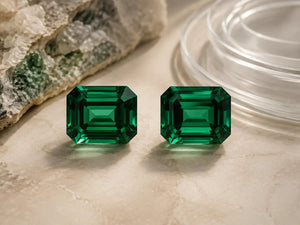
Olive skin has subtle greenish or gray-green nuances worth celebrating. Emerald green or blue-green can create a connection with those tones. Purple sapphire or ruby red offers a different contrast to compare, while Sunrise pink-orange introduces warmth beside them.
Look for the combination that makes you notice the character of your complexion. A more saturated stone or a distinct metal border can add definition; a softer shade can create a gentler transition. Try changing the size of the piece as well as its color to find the balance you like.
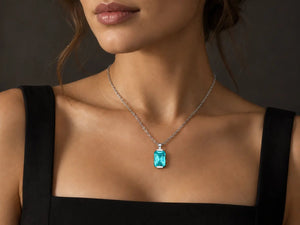
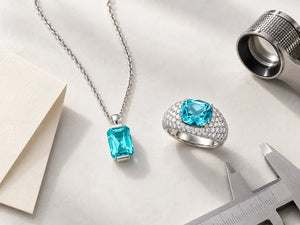
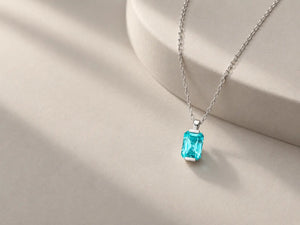
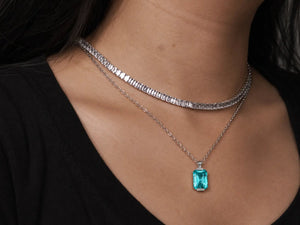
For blue-green, DREXEY's Paraiba Hue YAG is laboratory-created YAG, not tourmaline. The MAREA necklace lets you explore that shade alongside other gemstone options. Check the selected material and color on the product page.
Fair, medium, and deep skin: celebrate the beauty of each
The depth of your skin is part of the color relationship too. A gemstone's lightness and intensity can create a soft transition or a distinct contrast beside it. Compare both, with your attention on how beautifully the skin and stone work together.
Gemstones for fair or light skin
A lighter blue or peach-pink shade can create a delicate transition against fair or light skin. Royal blue, emerald green, or ruby red provides a stronger frame for its natural coloring. Compare whether you prefer the gentle connection or the more defined contrast.
Both can work. If you like a strong color but want a quieter result, try a smaller stone or a finer setting. Fair skin does not limit you to pastels.
Gemstones for medium or tan skin
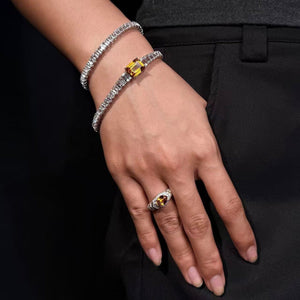
To explore the nuances of medium or tan skin, compare a warm shade with a cool one at a similar size. On a golden complexion, canary yellow can echo the warmth while royal blue offers a cool contrast. If your undertone leans cooler, try the same pair and notice how the relationship changes on you.
Look at the piece at normal viewing distance. A color that seems subtle in a close-up may still be exactly enough with your usual clothes.
Gemstones for dark or deep skin
The richness of deep skin can be beautifully framed by the contrast of Canary Yellow Sapphire, Hot Pink Sapphire, or Paraiba Hue YAG. Compare how the bright color draws attention to your complexion's depth. Royal blue, ruby red, or purple offers a deeper color relationship to explore alongside it.
A pale stone can create a luminous point of contrast against deep skin, while a darker stone can make the combination feel more continuous and subtle. Both are ways to appreciate the depth already there. Look at the complete pairing in daylight and softer indoor light to see which you love.
Try the color where you will actually wear it
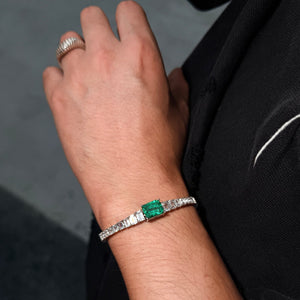
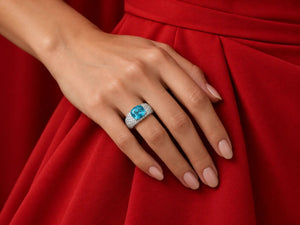
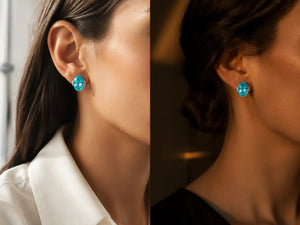
A ring is seen against your hand. A bracelet sits against your wrist, often beside a sleeve or watch. Earrings and a necklace near the face bring your hair, neckline, and makeup into the picture too.

For a ring, notice the skin around the stone as you move your hand, both close up and from a little distance. The ORBE cocktail ring is one way to explore how different gemstone colors frame the same hand in a statement silhouette.
For more on balancing vivid color with stone size and setting, explore our guide to choosing statement gemstone jewelry.
For a pendant, check where it falls: against bare skin or over fabric. That background becomes part of the combination. For a bracelet such as CŒUR LAC, include the watch or everyday rings you are likely to wear beside it.
When shopping online, compare footage of the actual color options when available. A model photo helps show scale and styling, but a different person's skin and different lighting will not predict exactly how the piece looks on you.
Choose the metal after you have a gemstone shortlist
Once you have two or three gemstone colors in mind, compare their available settings. White metal can give blue a crisp frame, while yellow gold introduces warmth. Pink-orange can be paired with a warm setting or a cooler border, depending on the effect you prefer.
Our guide to the best metal for your gemstone compares silver-colored, yellow gold, and rose gold settings across nine color choices. Use it for the next step, once you know which colors you want to explore.
A simple way to make the final choice
Begin with just two colors. Keep the style, stone size, and metal as similar as possible so the comparison is about color.
Look in soft daylight, then in the indoor light where you spend time. Wear a familiar top, and check the jewelry at normal viewing distance. Compare what you see in person when possible; camera adjustments and screen settings can change color.
Ask yourself what you notice about your skin beside each color. Does the pairing bring its warmth into focus, echo a cool nuance, or make its depth feel especially rich? Choose the effect you love seeing on yourself, including on an ordinary Tuesday.
Once you have found a color you love, explore who lab-grown gemstone jewelry is for and how to wear it for work, weekends, and celebrations.
Frequently asked questions
How do I know whether my undertone is warm or cool?
You can compare warmer and cooler colors beside your skin in consistent light and see which effect you prefer. You do not have to settle on a label. Vein color alone is not a reliable basis for choosing a gemstone, and a jewelry preference is not an undertone diagnosis.
Can emerald look good on every skin tone?
Yes. There is no skin tone that rules out emerald. Compare the particular green, the stone's size, and the setting. A vivid green statement ring and a small green pendant can give very different results.
What if my favorite gemstone does not match the recommendations?
Start with your favorite. Try a different metal, a smaller or larger stone, or another neckline before giving up on the color. These suggestions are meant to help you compare possibilities, not narrow what you are allowed to wear.
Do lab-grown gemstones follow different skin tone rules?
No separate styling rule is needed for a lab-grown sapphire, ruby, or emerald. Look at the actual color and the finished piece. If you want to understand the material names, our lab-grown gemstone guide explains the distinctions.
The beauty starts with you
Your skin is part of what makes the jewelry beautiful. Explore DREXEY's lab-grown gemstone rings with that in mind: look for the color that brings your own warmth, undertones, or depth into focus. The most personal choice is the one that makes you love the whole picture, with you in it.