- Aug 04
- By DREXEY Editorial
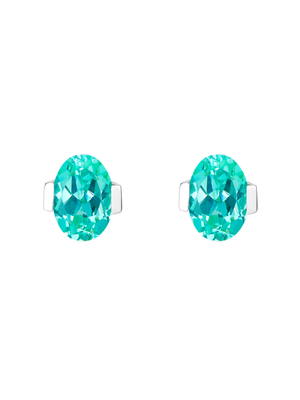
The phrase “lab-grown Paraiba” usually points to one thing: the vivid blue-green associated with Paraiba tourmaline. But color alone does not identify a gemstone. Different laboratory-created crystals—and even glass—can be produced in a similar hue.
Quick answer: As of 2026, GIA states that no synthetic gem tourmaline exists. A product described only as “lab-grown Paraiba” should therefore not be assumed to be tourmaline. Drexey’s blue-green option is Paraiba Hue YAG: laboratory-created yttrium aluminum garnet, identified by its material name and not presented as a laboratory-created counterpart of Paraiba tourmaline.
Key Takeaways
- “Lab-grown Paraiba” is an informal label, not a standardized gemological identity.
- As of 2026, GIA states that no synthetic gem tourmaline exists.
- Paraiba Hue YAG is laboratory-created yttrium aluminum garnet—not tourmaline and not a mineral garnet counterpart.
- A seller should disclose the actual material, not rely on a color name alone.
- Compare dimensions, cut, setting, care needs, photos, and video before buying.
What Is Paraiba-Hue YAG?
YAG stands for yttrium aluminum garnet. Its chemical formula is Y3Al5O12, and it crystallizes in a cubic, garnet-type structure. In a 2023 technical note, GIA describes YAG as a laboratory-created crystal used in faceted jewelry, with good brilliance and a Mohs hardness of about 8.25.
Despite the word garnet in its name, YAG is not a laboratory-created version of a mineral garnet. GIA explains that its chemistry does not match any garnet known in nature. It is also not tourmaline, so it should not be described as synthetic Paraiba tourmaline.
According to our supplier’s specification, the Paraiba Hue YAG used by Drexey is produced by the Czochralski crystal-pulling method. That statement applies to Drexey’s supplied material; it is not a claim that every colored YAG on the market is grown by the same process.
The complete name separates appearance from identity:
- Paraiba communicates the vivid blue-green color direction.
- Hue signals that Paraiba is a color reference, not the material.
- YAG identifies the laboratory-created crystal.
For a broader explanation of laboratory-grown mineral counterparts, laboratory-created crystals, and simulants, read What Are Lab-Grown Gemstones?

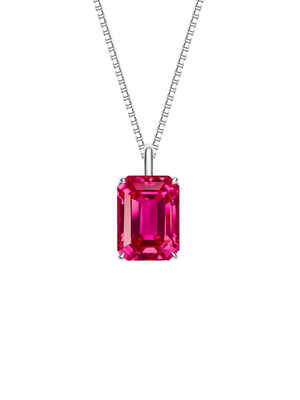
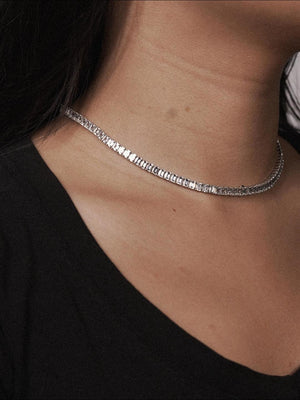
The CŒUR LAC necklace with a Paraiba Hue YAG center stone.
What Do Shoppers Mean by “Lab-Grown Paraiba”?
The appeal is easy to understand: electric blue-green color, a controlled laboratory origin, and a more accessible alternative to rare copper-bearing tourmaline. The problem begins when a color description is presented as the material itself.
Paraiba tourmaline is identified by tourmaline chemistry and copper content, not by color alone. GIA notes that copper-bearing Paraiba tourmalines are found in Brazil, Mozambique, and Nigeria. A YAG, sapphire, spinel, or glass product may resemble that color while remaining a fundamentally different material.
For that reason, quotation marks matter in this guide: “lab-grown Paraiba” is treated as an informal color-led label, not as a recognized laboratory-created form of Paraiba tourmaline.
Does Laboratory-Created Paraiba Tourmaline Exist?
Based on GIA’s published statement available in 2026, no synthetic gem tourmaline exists. A laboratory-created blue-green material can echo part of Paraiba tourmaline’s appearance, but it should not be assumed to share tourmaline’s chemical, physical, or optical properties.
This is also relevant to U.S. product naming. The FTC Jewelry Guides say marketers should not misrepresent a jewelry product’s type, substance, origin, production, or other material qualities. Section 23.25 further says that “laboratory-grown,” “laboratory-created,” or “synthetic” should not be paired with the name of a mined stone unless the product has essentially the same optical, physical, and chemical properties as that stone. Section 23.27 cautions against using “real,” “genuine,” or “natural” for artificially produced products.
In practical terms, a listing that says only “lab-created Paraiba” leaves a buyer without the information needed to evaluate composition, durability, care, and value. A color reference should support the material name, not replace it.
How Drexey Names and Discloses the Material
Drexey uses Paraiba Hue YAG because the name preserves the familiar color reference while keeping YAG visible. We do not describe this material as laboratory-created Paraiba tourmaline. On a product page, the customer should be able to see what the center stone is before checkout, without searching through fine print.
First-party disclosure: Drexey sells jewelry set with Paraiba Hue YAG and therefore has a commercial interest in this subject. We cite GIA for independent material and tourmaline information and the current FTC Jewelry Guides for U.S. naming principles. The growth-method statement above comes from our supplier’s specification. The product photographs and video below are Drexey sales materials; screen settings and lighting can change how blue-green color appears.

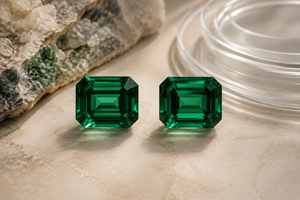
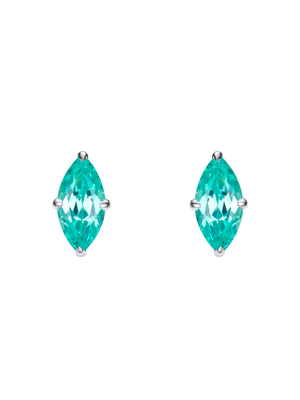
A close view of Paraiba Hue YAG and its emerald-cut facets.
See the Color in Motion
A still photograph cannot show every reflection. This video shows a loose Drexey Paraiba Hue YAG crystal moving under light so you can assess its color, transparency, and facet pattern more clearly.
Paraiba Tourmaline vs. an Unclear “Lab-Grown Paraiba” Label vs. Paraiba Hue YAG
| Feature | Paraiba tourmaline | Unclear “lab-grown Paraiba” label | Drexey Paraiba Hue YAG |
|---|---|---|---|
| Material | Copper-bearing tourmaline | Unknown until disclosed | Yttrium aluminum garnet |
| Origin | Geological formation | Depends on the material | Laboratory-created |
| Relationship to tourmaline | Tourmaline | Cannot be assumed | Not tourmaline |
| Mohs hardness | About 7–7.5 | Depends on the material | About 8.25 |
| Value basis | Quality, treatment, supply, and provenance | Cannot be assessed without identity | Crystal quality, color, cut, and craftsmanship |
| What to verify | Identity, treatment, quality, and origin | Exact composition and disclosure | YAG identity, dimensions, cut, and setting |
These are different buying decisions. Paraiba tourmaline may appeal to someone who values geological origin, copper-bearing chemistry, provenance, and rarity. Paraiba Hue YAG may appeal to someone focused on saturated color, clarity, visual presence, and contemporary design. One should not be represented as the other.
Is Paraiba Hue YAG Suitable for Regular Wear?
YAG’s Mohs hardness of about 8.25 indicates good resistance to surface scratching, but hardness is not the same as resistance to chipping or breakage. A sharp impact can still damage a facet edge or exposed corner, and the setting and metal also affect how a finished piece should be worn.
- Remove the piece before exercise, gardening, cleaning, or impact-heavy work.
- Avoid chlorine, bleach, perfume, hairspray, and harsh household chemicals.
- Store it separately from harder materials such as sapphire, moissanite, and diamond.
- Wipe it with a soft, lint-free cloth after wear.
- For home cleaning, use a soft cloth lightly dampened with mild soapy water, then dry promptly.
- Avoid steam or ultrasonic cleaning unless a jeweler confirms the complete piece is suitable.
A Buyer’s Checklist for Paraiba-Colored Laboratory-Created Jewelry
- Ask for the exact material. Is it YAG, sapphire, spinel, glass, a composite, or something else?
- Read the title and specifications together. The clear material identity should appear before purchase.
- Compare millimeter dimensions. Carat is weight, and materials with different densities can have different weights at a similar face-up size.
- Review setting and care. Hardness alone does not describe the durability of a complete piece.
- Look at photos and movement video. Blue-green color can shift with lighting, camera exposure, and screen calibration.
- Read any report, not just its cover. For a product sold as Paraiba tourmaline, check the issuing laboratory and the identification line.
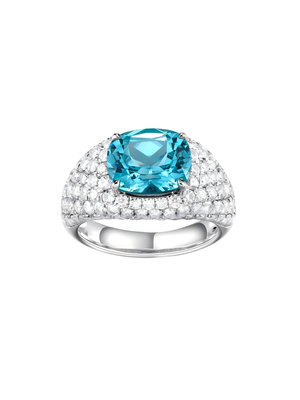
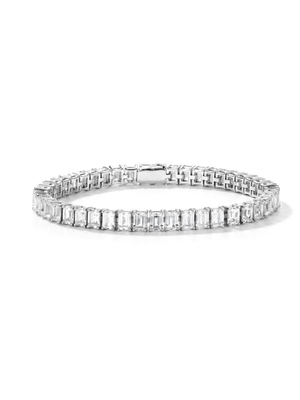
You can view Drexey’s blue-green option in the CŒUR LAC emerald-cut necklace and the CŒUR LAC gemstone tennis bracelet.

The CŒUR LAC bracelet pairs a blue-green Paraiba Hue YAG center with white accent stones.
For more material comparisons, read White Sapphire vs. Moissanite and our guide to whether laboratory-created gemstones are worth buying.
Frequently Asked Questions
What does “lab-grown Paraiba” mean?
It is commonly used by shoppers for a laboratory-created material with blue-green color inspired by Paraiba tourmaline. It does not identify one standardized material, so the seller should also state the exact crystal or substance.
Is Paraiba Hue YAG tourmaline?
No. Paraiba Hue YAG is laboratory-created yttrium aluminum garnet. Paraiba describes its color direction; YAG identifies the material.
What material is Paraiba Hue YAG?
It is a laboratory-created YAG crystal with the formula Y3Al5O12. It is not glass, plastic, tourmaline, or a laboratory-created counterpart of a mineral garnet.
Does synthetic Paraiba tourmaline exist?
As of 2026, GIA states that no synthetic gem tourmaline exists. A product using “lab-grown Paraiba” should therefore disclose the different material actually being sold.
Why is Paraiba Hue YAG priced differently from Paraiba tourmaline?
They are different materials with different supply and value bases. Paraiba tourmaline pricing can reflect geological supply, quality, treatment, and provenance. YAG pricing reflects laboratory production, crystal quality, color, cutting, and jewelry craftsmanship.
Can Paraiba Hue YAG be worn in a ring?
Yes, with sensible care. Its hardness offers good scratch resistance for jewelry, but a ring receives more knocks than a pendant or earring, so protect it from hard impacts and abrasive contact.
Final Thoughts
If the color is what drew you to “lab-grown Paraiba,” the next question should be: what material was created? A complete answer lets you compare durability, care, dimensions, appearance, and price on the right basis.
Drexey’s answer is Paraiba Hue YAG: a laboratory-created YAG crystal named for both its color direction and its material identity. It is not offered as Paraiba tourmaline. Clear naming keeps the color story without blurring the facts behind the stone.